


The Miseczki Mix
Translating the world of bras, measurements, and life with breasts


Why Do The Best Bras Come From Poland?
Read More
A deep dive into a longstanding tradition and internationally recognized approach
About The Miseczki Mix
Navigating the world of bras can be tough and confusing. That's why our bra experts are tackling and translating the ins and outs of life with breasts: everything from bras to breast and women's health. We share our thoughts with you so that you don't need to scour the internet and go pages deep into that ultra specific forum (or 5) you've been following to optimize your lingerie.

Best Wired Polish Bras for Narrow Root Shapes in DD+
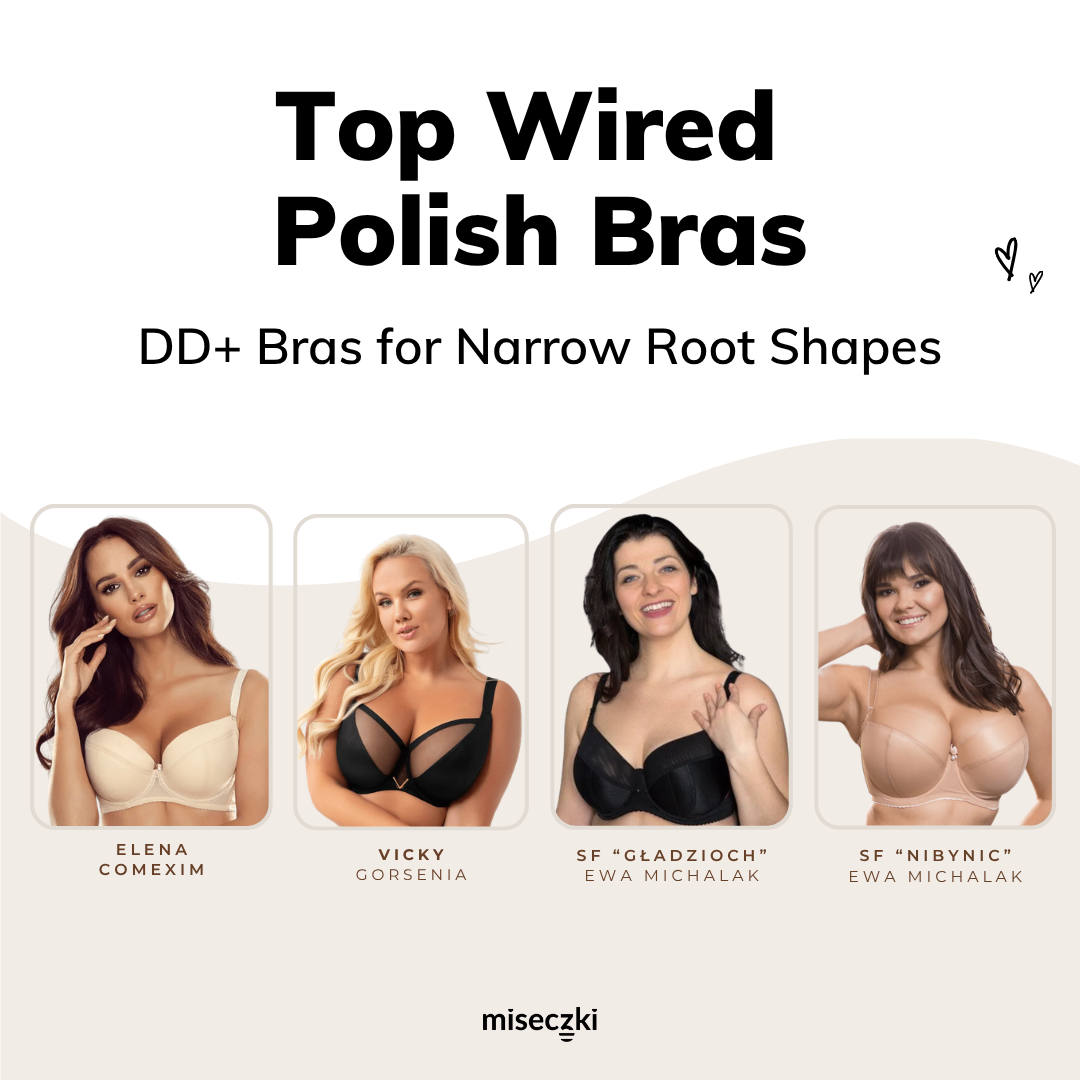
If you have a narrow breast root in a DD+ cup size, most standard bras were simply not built for your shape. Wide underwires sit on surrounding tissue or in the armpit, pushing tissue outward instead of gathering it forward, so even the “right” cup size never feels secure. Polish bras are designed with narrower underwires, deeper projected cups, and firm lower cup support that match the actual footprint of your breast. This guide explains why wire width matters so much for narrow roots and breaks down four of the best wired Polish bras for the shape, from Comexim, Gorsenia, and Ewa Michalak. You’ll also learn what to look for in a wired bra so you get better lift, shape, and all-day comfort.


Best Unmolded Polish Bras for Soft Tissue Support in Full Busts
Soft breast tissue in DD+ sizes has a specific problem with molded cups: the pre-formed shell imposes a shape the tissue does not naturally hold, which leads to gaping at the top, shifting throughout the day, and a silhouette that looks more like the bra than like the person wearing it. Unmolded bras work differently, instead of a fixed foam form, they use multi-part seamed cups that shape tissue through construction, adapting to what is inside rather than fighting against it. For soft tissue specifically, that distinction matters more than it does for any other tissue type, because softer busts compress more easily, fluctuate more across the month, and need firm lower cup panels and a stable band to maintain lift over the course of a full day. The three Polish bras below are built around exactly that: a structured base that lifts from beneath, flexible upper panels that adapt without cutting in, and side containment that keeps soft tissue centered rather than letting it drift.


How Bra Size Changes: Hormonal Changes, Weight Fluctuations, and Life Stages Affect Your Size
Your bra size isn't fixed, it shifts with your menstrual cycle, pregnancy, breastfeeding, weight changes, and menopause, sometimes month to month and sometimes over years. These changes are driven by hormones, body composition, and the natural evolution of breast tissue, and they're completely normal, even when they catch you off guard. Understanding what's behind the shift helps you know when it's time to reassess your fit rather than just live with a bra that no longer feels right. This guide walks through each life stage and hormonal trigger, along with practical fit tips for full-bust women navigating them. It also explains why Polish bras, with their deep cups, sturdy bands, and wide size range, are especially well-suited to bodies that are always changing.
DD+ Bras Made in Poland Are Our Passion & Expertise


Specialized Polish Fit Expertise
Unlike many other boutiques, Polish bras are our specialty and our passion. We work exclusively with the top Polish brands and understand the subtle nuances in fit, shape, style, and support.


Personalized Fit Support
Have a question on sizing? Start with our size guide, complete with a Polish Bra Size Calculator to find your best starting point and brand conversions. Still unsure? Contact us, for tailored fit advice.


Loyalty Points and Discounts
Join our loyalty program to earn points for discounts on future orders. Sign up for our newsletter to stay up-to-date on our latest deals and arrivals.


Fast Delivery and Exchanges
We provide fast, hassle-free, domestic delivery. All orders are shipped out of Chicago and typically arrive within a few days. If you need a size adjustment, it's easy to make a free exchange. We offer free returns for store credit (+ 5% bonus credit where eligible).