
The Truth About Bra Bands: Why Stretchy Comfort Isn’t Support for Full Busts

If you’ve spent any time learning about bra fit, you’ve likely heard the phrase: “The band does most of the work.” It’s repeated often and still routinely underestimated.
Even among women who are deeply knowledgeable about bra fitting, band size is the area most likely to be compromised. Cups get scrutinized. Wire width gets debated. Projection and root height get analyzed. But the band? Too often, it’s tolerated rather than optimized.
For full-bust women especially, this compromise quietly undermines everything else. Shoulder pain, unstable cups, distorted wires, slipping straps, bras that feel great at first and miserable by mid-day, these are almost always symptoms of a band that isn’t doing its job. Surveys and studies often cite that 70-85% of women wear incorrectly fitted bras, and the most common mistake is choosing too large a back band and too small a cup. This leads to an uncomfortable fit, poor support, and issues like chafing or shifting throughout the day.
This article takes a closer look at why band size is the true foundation of bra support, how it affects every other component of the bra, and why Polish bras place such intentional emphasis on firm, supportive band construction. Because once the band is right, fit stops being a struggle and starts being reliable.

The Band: The Primary Source of Bra Support
The band is not simply the part of the bra that keeps it closed. It is the structural backbone of the entire garment.
In a properly fitted bra, about 70–80% of the support comes from the band because it wraps firmly around the rib cage, creating a stable counterforce to the forward pull of breast weight. This resistance allows the cups to lift and contain properly, keeps the underwires seated at the breast root, and lets the straps function as stabilizers rather than load-bearing elements.
For full-bust figures, this is especially important, as heavier breast tissue needs to be supported horizontally around the torso instead of pulling downward. When the band is snug, level, and well-constructed, support is distributed across the rib cage, the body’s strongest structural area, reducing strain on the shoulders and neck. Wider bands can enhance this effect by dispersing pressure more evenly, increasing both comfort and long-term stability.
This is also where many people misunderstand what comfort actually feels like in a bra.
It’s easy to assume that a softer, stretchier band will feel more comfortable, but for fuller or heavier busts, too much stretch often has the opposite effect.
When a band is overly flexible, it can’t hold breast weight securely. Support shifts upward to the straps and shoulders, leading to fatigue, tension, and constant adjustment. True comfort comes from stability. A well-designed band can feel firm and supportive while still being smooth, soft to the touch, and non-irritating against the skin.
A supportive band should feel secure and intentional. It should not shift when you move, ride up your back, or require constant adjustment. If it does, it isn’t supporting you. It’s simply existing.

Breaking Down the Key Elements of the Bra Band
Understanding how a band works becomes much easier when you look at its individual components. Each part plays a specific role in stability, comfort, and long-term support, especially for full-bust bras.
The Wings
The wings are the sections of the band that extend from the outer edges of the cups, sit under the arms, and wrap around the back. Their job is to stabilize the band and help distribute tension evenly around the torso. In full-bust bras, well-constructed wings reduce lateral movement, prevent rolling or folding under the arms, and improve overall comfort throughout the day.
The Fastening and Closures
The closure is where the band secures at the back, usually with hook-and-eye fastenings. Multiple columns of hooks allow for small adjustments over time as the band relaxes with wear. For full-bust support, closures are not just about fastening the bra, but about maintaining consistent tension so the band stays level and supportive as the bra ages.
The Elastic
Elastic is what allows the band to stretch and recover, but its quality matters far more than its softness. High-quality elastic provides controlled stretch, meaning it gives just enough for comfort while still snapping back into place. In supportive bras, elastic is chosen to resist overstretching, ensuring the band continues to anchor the bra properly instead of losing structure after a few hours of wear.
Together, these elements determine whether a band simply exists on the body or actively supports it. When wings, closures, and elastic are thoughtfully designed, the band becomes a stable foundation rather than a weak link.
Why the Band Acts as the Bra’s Anchor
The band’s most important job is to act as the anchor of the bra. It secures the entire structure, including the cups and underwires, firmly to the rib cage so support can be directed upward and inward instead of pulling downward. When the band is properly anchored, the cups can lift effectively, the underwires stay seated at the breast root, and the bra remains stable as you move throughout the day. Without a secure anchor, even well-designed cups and wires cannot function as intended.
This anchoring role also explains why band fit preferences often change as cup size increases. As breasts become heavier, the elastics in the band have to work harder to support and distribute that weight. It is common for women with larger cup sizes to prefer a slightly tighter band than someone with the same underbust measurement but a smaller bust. Choosing a firmer or even smaller band size can create better anchoring, improved weight distribution, and more consistent support under the bust, all while still feeling comfortable when the band is well constructed.
Why Full-Bust Wearers Feel Band Issues More Intensely
Full-bust bodies experience the consequences of poor band fit faster and more dramatically than smaller busts.
When breast weight is significant, even a small loss of band tension creates a cascade effect. Cups tilt forward. Wires slide down. Straps tighten in response. The upper body compensates by subtly changing posture often without the wearer realizing it.
Over time, this leads to:
-
Neck and shoulder fatigue
-
Upper-back tension
-
Strap grooves and soreness
This is also why how a bra fits when it is brand new matters more than many people realize.
A new bra should feel secure on the loosest set of hooks.
This allows room for small adjustments over time as the band naturally relaxes with wear. Starting on the tightest hooks often means the band was never providing proper support to begin with.
A proper fit of the band is important to prevent shoulder and back pain for any person, especially those with full busts.
Many full-bust women mistakenly believe this discomfort is unavoidable. In reality, it’s a sign that the band is not providing the resistance it was designed to offer.
How an Incorrect Band Size Distorts Overall Fit
An incorrect band doesn’t just feel wrong, it alters the physics of the entire bra. When the band is too loose, it can lead to the bra riding up your back—if you notice the band riding up your body, then your band is too big. This not only reduces support but also distorts how the bra fits overall, affecting comfort and the positioning of the cups and straps. Properly fitted bra bands are essential for ensuring your bra fits as intended and provides the necessary support.
When the Band Is Too Loose
A loose band rides up the back, changing the angle at which the cups sit on the body. This causes the underwires to slide downward and away from the breast root, even if the cup volume itself is sufficient.
As the cups lose their anchor point, breast weight shifts forward and downward. This creates the illusion that the cups are too small or poorly shaped, when the real issue is instability. The straps then tighten to compensate, pulling weight down onto the shoulders.
This is why many bras feel supportive for the first hour, then progressively worse, the band relaxes, and the entire system collapses.
When the Band Is Too Tight
A band that is too tight creates excessive pressure rather than effective support. Instead of anchoring the bra comfortably, it compresses the rib cage, which can lead to pain, deep red marks, welts, and lingering soreness after removal. This level of pressure is not a sign of good support. It is a sign that the band is working harder than it should.
Excessive tightness also places strain on the bra itself. Over-tension can distort underwires, stress seams, and accelerate wear on elastics and fabrics, causing the bra to lose its supportive properties more quickly. In some cases, a too-tight band can make fit issues harder to diagnose, as the added pressure may temporarily hold the bra in place while creating discomfort and reducing the lifespan of the garment.

The Band–Cup Relationship: Support Mechanics in Action
Band size and cup size are inseparable. One cannot function properly without the other.
Cup size is determined by the difference between your bust measurement (measured at the fullest part of your bust) and your band size. Finding the right bra size depends on this calculation, as the difference directly impacts cup volume and fit.
Cup volume scales with band size, meaning a 34F and a 36F do not behave the same way even though the letter is the same. The band provides the resistance that allows the cup to project forward and lift upward. Without that resistance, the cup collapses or pulls upward, regardless of its volume.
For projected full busts, this relationship is especially important. A snug band allows the cups to:
-
Hold breast tissue forward rather than downward
-
Maintain contact with the chest wall
-
Keep the underwire seated at the inframammary fold
When the band is correct, lift comes from structure rather than strap tension. Root coverage improves, gore tacking becomes more reliable, and the bra feels stable instead of precarious.
This is why experienced fitters often say: “Start with the band.” Everything else depends on it.
Material Quality, Stretch, and Longevity of Band Support
Band support is not just about size, it’s about materials and construction. The choice of fabric, such as mesh for breathability or brushed for softness affects both the comfort and function of the bra band. Additionally, the number of hooks or fastenings on the band can influence the level of support and adjustability. The fastening at the back of a bra is nearly always adjustable, allowing you to customize the fit as needed for optimal support and comfort.
Powermesh and Controlled Stretch
High-quality powermesh offers controlled elasticity. It stretches enough to accommodate movement and breathing, but resists enough to maintain support. Even bras labeled the same size can fit differently depending on the powermesh and other materials used, as variations in elasticity and construction affect the actual fit. Cheap elastics may feel soft initially but lose tension quickly, turning supportive bras into strap-reliant garments.
Elastic Density and Recovery
Dense elastics recover their shape after wear. This means the band continues to fit properly over time instead of relaxing permanently after a few wears.
Reinforced Wings and Band Stability
Reinforced wings play an important role in how well a bra band supports a full bust. The wings are the sections of the band that extend from the outer edge of the cups, sit below the armpits, and wrap around the back. When these areas are properly constructed, they add stability to the band and help distribute tension more evenly around the torso.
For fuller or heavier busts, reinforced wings improve lateral support and help prevent the band from rolling or folding under the arms. Some bra makers take this a step further by incorporating additional structural elements such as vertical bonding in the wings, which increases stability and helps the band maintain its shape over time. This type of construction, seen in brands like Gorteks, allows the bra to provide reliable support well beyond the first few wears.

How to Assess Proper Band Fit
To assess your bra band fit, start by measuring your ribcage just under the bust while standing upright, keeping the tape straight, parallel to the floor, and comfortably snug. This underbust measurement in inches serves as a starting point, but how it translates to a band size depends on the brand.
For some brands, the measurement corresponds directly to the band size, while others require adding a small amount to achieve the intended fit. Because sizing philosophy and construction vary widely, the most reliable approach is to consult each brand’s sizing chart and fit notes. Comparing your measurements to those guidelines, and even checking the relaxed length of a bra band laid flat, can help ensure you choose a band that provides consistent, comfortable support.
Even experienced bra wearers benefit from regular band reassessment.
A properly fitted band should:
-
Sit in a straight line around the torso, level and not pulled upwards
-
Feel firm on the loosest hook when new
-
Allow no more than two fingers underneath the band without pulling away (the two-finger test)
-
Stay in place when raising arms or bending
If the band spins easily, pulls far from the body, or creeps upward, it’s too loose. If breathing feels restricted or wires distort outward, it may be too tight.
Bodies change. Elastics age. Fit evolves. Rechecking band size is not regression, it’s maintenance.
Common Band Myths That Undermine Full-Bust Fit
Even knowledgeable wearers fall into these traps:
-
“A tighter band is always better.” Support requires balance, not discomfort. The bra band should fit snugly and securely, but not so tightly that it causes discomfort or digs into your skin.
-
“Straps should hold you up.” Straps stabilize; bands support.
-
“If it closes, it fits.” Closure does not equal correct tension.
-
“Comfort means softness.” Comfort comes from stability and distribution of weight.
Dispelling these myths prevents years of unnecessary discomfort even at an advanced level.
Why Band Fit Is the Key to Bra Confidence
When the band fits correctly, something subtle but powerful happens:
-
Your posture improves naturally
-
Your shoulders relax
-
Your cups behave consistently
-
Your bra fades into the background of your day
Properly adjusted shoulder straps work together with the bra band to provide balanced support and prevent slipping or discomfort. Bra bands come in different styles, such as standard back-closure, front-closure, longline, and pullover. Choosing the right style can help accommodate your unique shape and support needs.
That’s the real marker of success.
For full-bust figures, confidence doesn’t come from tolerating discomfort. It comes from wearing bras designed to support real bodies, with real weight, projection, and variation.
Where to Find Quality, Firm, and Supportive Bands
Polish bras are designed with a fundamentally different philosophy than many mainstream brands. Rather than prioritizing immediate softness or excessive stretch, they focus on structural integrity and long-term support, especially in the band.
It’s easy to assume that softer and stretchier automatically means more comfortable, but for fuller or heavier busts, the opposite is often true.
When a band is too loose or overly stretchy, it cannot properly support breast weight. The result is more strain on the shoulders, more movement throughout the day, and less overall comfort. True comfort comes from stability, not from stretch that gives out too quickly.A well-designed band can be firm and supportive while still feeling soft against the skin. Quality materials allow a band to hold its shape without scratching, digging, or irritating, proving that structure and comfort do not have to be trade-offs.
This approach allows Polish bras to maintain support throughout the day, rather than feeling comfortable only in the first hour of wear.
Polish bras are known for their firm, supportive bands, especially in full-bust size ranges. Rather than relying on excessive stretch, these bands are designed to anchor deep cups, support forward projection, and stay stable throughout the day. This stability allows straps to function as fine-tuning elements, helps cups maintain lift and shape longer, and keeps underwires properly aligned with the breast root.
Two excellent examples of this approach are Ewa Michalak and Gorsenia. Ewa Michalak is especially well known for exceptionally firm bands and highly supportive designs, even for very heavy busts. Gorsenia offers a lighter, sexier aesthetic while still providing reliable support in sizes extending up to an M cup.
For full-bust wearers, this kind of band construction translates directly into comfort. There is less shoulder strain, fewer adjustments, and less fatigue as the day goes on. Polish bras may not feel invisible the moment you put them on, but their support becomes more noticeable the longer you wear them.

Start With the Band, Always
Band size is not a detail. It is the foundation.
At Miseczki, we specialize in Polish bras because they respect this truth. Firm, supportive bands paired with thoughtfully engineered cups create bras that don’t just fit, they function.
When buying a new bra, it should fit perfectly on the loosest set of hooks to allow for future adjustments as the band stretches.
If a particular bra feels too tight but fits well everywhere else, using a bra band extender can help improve comfort and extend the life of your bra.
If you’re ready to reassess your band size and experience what true support feels like, explore our curated selection and rediscover what a well-anchored bra can do.
👉 Explore full-bust bras with proper band support
👉 Learn more about Polish bra construction
👉 Build your fit from the foundation up
Because when the band is right, everything else finally falls into place.


How Bra Size Changes: Hormonal Changes, Weight Fluctuations, and Life Stages Affect Your Size
Your bra size isn't fixed, it shifts with your menstrual cycle, pregnancy, breastfeeding, weig...
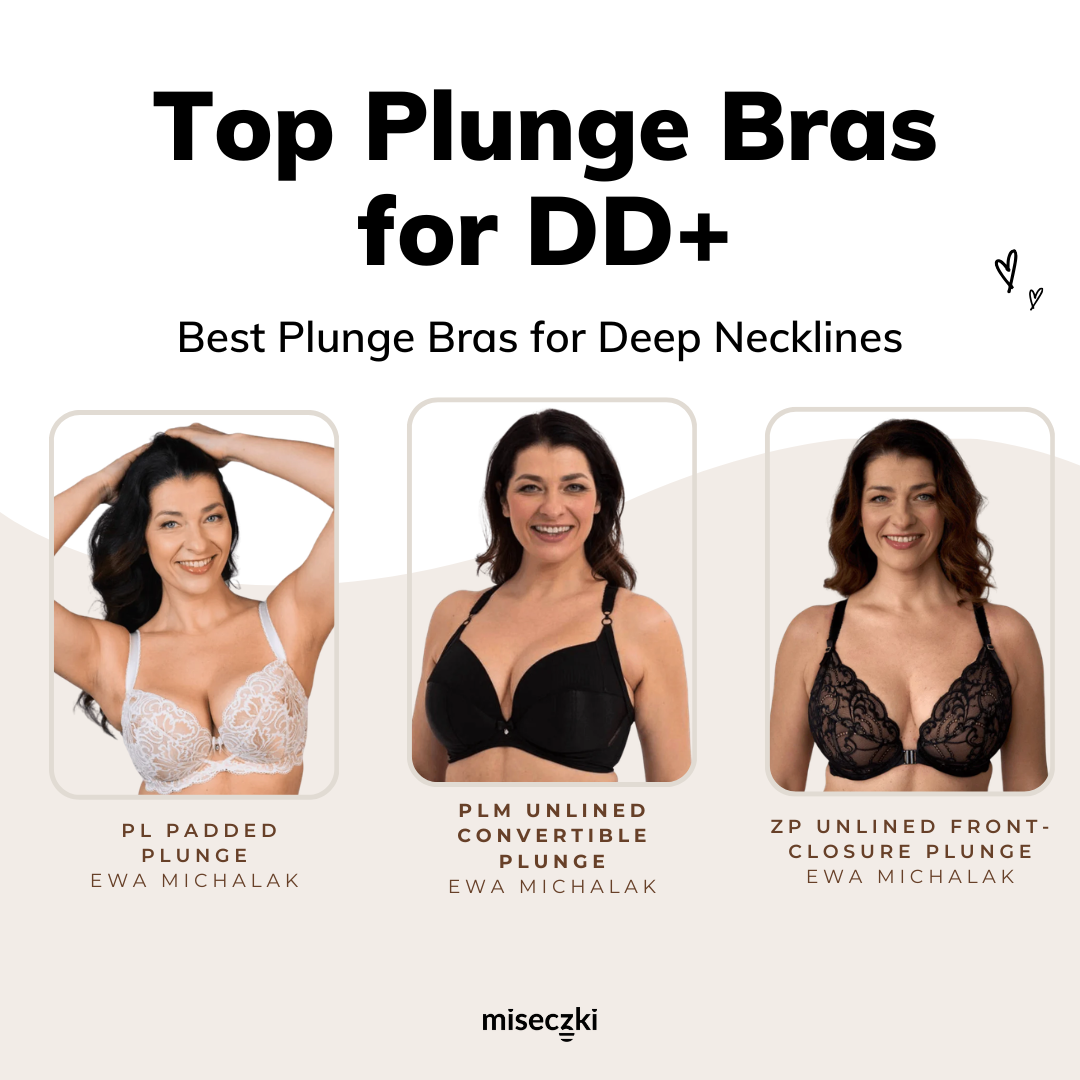

Best Plunge Bras for Deep Necklines
Low necklines and DD+ cup sizes are a notoriously difficult combination, but the problem is no...


Top Wired Polish Bras for Asymmetrical Breasts
Breast asymmetry affects more than half of all women, but most bras are built as though it doe...
DD+ Bras Made in Poland Are Our Passion & Expertise


Specialized Polish Fit Expertise
Unlike many other boutiques, Polish bras are our specialty and our passion. We work exclusively with the top Polish brands and understand the subtle nuances in fit, shape, style, and support.


Personalized Fit Support
Have a question on sizing? Start with our size guide, complete with a Polish Bra Size Calculator to find your best starting point and brand conversions. Still unsure? Contact us, for tailored fit advice.


Loyalty Points and Discounts
Join our loyalty program to earn points for discounts on future orders. Sign up for our newsletter to stay up-to-date on our latest deals and arrivals.


Fast Delivery and Exchanges
We provide fast, hassle-free, domestic delivery. All orders are shipped out of Chicago and typically arrive within a few days. If you need a size adjustment, it's easy to make a free exchange. We offer free returns for store credit (+ 5% bonus credit where eligible).