
Understanding Full Bust Breast Shapes: How and Why Shape Influences Fit!


If you already know your band size, cup size, and why most mainstream bras don’t quite cut it for a fuller bust… welcome. You’re in the right place.
Breasts come in many different shapes and sizes, and this diversity is completely normal. Breast size and shape can vary widely from person to person, and all variations are natural and valid.
Even among women who are well-versed in bra fitting, one factor is often underestimated: breast shape. Two people with the same measurements can need completely different bras and the reason almost always comes down to shape. Often-mentioned breast shape descriptors include round, teardrop/bell, athletic, conical, east-west, relaxed, slender, and side-set, but these terms are not necessarily mutually exclusive and they don't all apply to fuller busts. Understanding breast shape and how shape characteristics combine for those with larger, fuller busts is the missing link between “this is my size” and “this bra actually fits my body.”
This breast shape guide is designed for full-bust women who want to go deeper. We’ll break down common full-bust shapes, how shape affects support needs, why some bras seem technically “right” in terms of cup and band size but are still uncomfortable and unflattering. Importantly, we discuss how specific bra styles address shape-specific challenges. The archetypal shape is round and full with a small point at the nipple, and most bra designs are based on this common shape that's actually not very common in women with larger busts. Variations in breast shape and size are determined by genetics, weight, age, and hormonal changes such as pregnancy or menopause. Recognizing that diverse breast shapes and sizes are natural promotes body positivity and challenges unrealistic media ideals.
Because true fit isn’t just about size, it’s about geometry and physics.

Why Breast Shape Matters in Bra Fit
Breast shape significantly influences how breast tissue behaves inside a bra, affecting volume distribution, weight placement, projection, and containment needed for comfort and support.
Most mass-market bras are designed for a narrow range of shallow, evenly distributed breast shapes. For full-bust women with more projection, softer tissue, or asymmetry, this often causes fit issues like gaping, bulging or spillage, wire discomfort, or the need to size up or down unnecessarily. Even a technically correct size in terms of band size and cup volume can feel wrong if the shape isn’t properly supported.
Understanding your breast shape helps you choose bras that work with your anatomy, not against it. This is especially important for full busts, where poor shape compatibility can lead to shoulder pain, wire distortion, or premature bra wear.
Breast shapes vary widely due to genetics, hormonal changes, age, pregnancy, breastfeeding, and weight fluctuations. Weight changes can greatly affect breast size since breast tissue contains substantial fat. Common breast shapes include round (even fullness top and bottom), teardrop or bell shaped (fuller bottom, narrower top), and east west (nipples point outward in opposite directions with more tissue on the sides). East west and wide or side set breasts often have a wider gap and outward-facing nipples, while other shapes have different tissue distribution and nipple orientation. Other common descriptions include athletic (more muscle, less tissue - these generally describe smaller breasts), conical or slender (narrow and long with a narrow root), and pendulous or relaxed (looser tissue, nipples point downward).
Some commonly mentioned "shapes" have overlap (e.g., it's possible to have wide-set round or wide-set pendulous breasts!). Everyone’s shape profile is unique, and knowing yours is key to finding the right fit and support.
Recognizing your breast shape affects bra fit and support. For example, women with wide set breasts may find it hard to achieve cleavage without bras that bring breasts closer together. Those with slender or conical breasts often need bras that accommodate a narrower base and more projection. Women with more side tissue may benefit from bras with side support panels. Asymmetry is normal, over 50% of women have some difference between breasts and can be managed with bras featuring removable padding or adjustable elements.
Choosing bras that match your breast shape helps prevent common issues like cup gaping, spillage, or wire discomfort. Supportive bras designed for specific shapes include full coverage cups for pendulous breasts, push up bras for added lift and fullness at the top, and molded bras for smooth shaping of round breasts.
Ultimately, understanding breast shape empowers you to select bra styles, sizes, and features that complement your natural shape, enhance comfort, and provide the support you need all day.

The Elements: Characteristics that Create Your Unique Breast Shape
While no two bodies are exactly alike, breasts come in many different shapes, and most full-bust shapes fall into a few general categories.
Breast Root: where your breasts attach to your chest
Diameter: Wide Root vs. Narrow Root
Root width refers to the diameter of the area where the breast attaches to the chest wall.
Wide-rooted breasts attach across a broader area of the chest. This shape often benefits from bras with wider underwires and more side coverage to fully encompass breast tissue and prevent it from escaping under the arms. When wires are too narrow for a wide root, tissue can spill sideways or sit on top of the wire, leading to discomfort and instability.
Narrow-rooted breasts attach to a smaller area of the chest wall and require narrower wires that follow the natural breast root. Wires that are too wide often create empty space between the breast and the wire, cause poking under the arms, or force breast tissue wide unnaturally. Cups for narrow roots should project forward rather than spreading volume wide.
Setting: Wide Set vs. Narrowly Set Breasts
Root setting refers to how far apart the breasts sit from one another.
Folks with breasts that are more widely set may prefer bras that offer inward support or side support panels to guide tissue forward. Narrowly set breasts often need narrower gores and carefully placed wires to avoid pressure at the center.
Key Fit Note: Your bra’s underwire shape and placement must align with your breast root width and setting. When wires don’t match your root, support breaks down regardless of size.
Bonus: Playing around with wire placement can help you achieve a different silhouette. Choosing narrowly set wires (that don't poke) can create a more forward, centered look even if your breasts naturally splay wide and outward.
Projection: the extent to which breasts extend outward from the chest
Projected vs. Shallow
Projected breasts extend outward from the chest wall and require sufficient cup depth to hold tissue without pushing it downward or outward. Bras with deeper cups and more vertical seam construction allow projected tissue to sit naturally and stay anchored throughout the day. When cup depth is insufficient, the band and wires are forced to bear excess weight, often leading to wire digging, sliding, or a flattened silhouette.
Shallow breasts spread more broadly across the chest and need wider, flatter cups that accommodate a broader base. Cups that are too deep for shallow shapes can gape or collapse.
Many full-bust women are projected, which is why shallow bras often feel compressive, unstable, or unflattering.
Key Fit Note: Your bra cup depth must match your breast projection. Depth mismatch is one of the most common causes of discomfort in full bust bras.
Fullness: where the breast tissue is concentrated
Full-on-Top vs. Full-on-Bottom
Full-on-top breasts carry more volume above the nipple. The upper cup of a bra needs enough height and flexibility to avoid cutting in or creating bulges. Stretch lace or open upper cup designs work best, as rigid cup edges often cause pressure or spillage. Support should accommodate upper fullness without compressing it downward, which can distort shape and cause discomfort.
Full-on-bottom breasts carry more weight below the nipple. Bras with reinforced lower cup panels help lift tissue upward while preventing sagging or gaping at the top. Strong support at the base allows lift to come from below rather than relying on straps or upper cup tension.
Some women may also choose bras that subtly enhance upper fullness to create a more balanced or rounded silhouette, especially when working with softer tissue.
Center-Full vs. Outer-Full
Center-full breasts have more volume concentrated near the cleavage. This shape benefits from firm center gores and strong inner cup construction to maintain separation and prevent spillage. Proper support here reduces wire discomfort caused by tissue pressing inward and improves overall stability.
Outer-full breasts carry more tissue toward the sides of the chest. Bras with side support panels help guide tissue forward, improving lift, reducing underarm spillage, and minimizing strap strain. This inward support also enhances the appearance of east-west shapes by creating a more centered profile.
Key Fit Note: Cup shape, seam placement, wire width, and material flexibility must work together to match your fullness profile. When they don’t, bras often feel “almost right”, but never quite comfortable.
Note: Tissue density and firmness, while technically not a shape characteristic, has a critical impact on fullness distribution and projection. Firmer, denser tissue tends to have more upper fullness while softer, more compressive tissue lacks the fibrous structure to keep fullness at the top (this is where a great bra can shine!)
Identifying these characteristics helps explain why certain bras feel “almost right” and why others, which account for these nuances, often feel transformative.
How Shape Affects Support Needs

Support is never one-size-fits-all especially for full busts. Breast shape determines where support needs to be concentrated, how weight is distributed, and which bra structures will actually work with your body instead of fighting it. Even when the bra size is technically correct, a shape mismatch can lead to discomfort, instability, or fatigue throughout the day.
Understanding these shape-specific support needs allows you to choose bras that provide true lift, comfort, and longevity - not just containment.
Below are the key ways different breast shapes influence support requirements:
Round Breasts
Round breasts are relatively even in volume at the top and bottom, making them one of the most versatile shapes.
-
They typically work well in a wide range of bra styles.
-
Balanced fullness means fewer fit issues with cup cutting or gaping, the most common issue is digging at the top due to upper fullness, so the cup shape should accommodate upper fullness without compression.
-
Support needs are generally straightforward, with emphasis on stability rather than shape correction.
Teardrop / Bell-Shaped Breasts
Teardrop and bell-shaped breasts are fuller and heavier at the bottom with a narrower or more gradual slope at the top.
-
Strong lower-cup support is essential to lift weight from below without relying on upper-cup volume.
-
Full cup and full-coverage styles help contain breast tissue and prevent gaping at the top.
-
Proper support reduces downward pull on the band and wires, maintaining comfort and stability throughout the day.
Conical / Relaxed (Elongated U Shape) Breasts
Conical or relaxed breasts have a longer, more elongated shape with less upper fullness and softer tissue that settles lower on the chest.
-
Cups need sufficient depth and vertical support to prevent the breast from being pushed downward or flattened.
-
Structured lower cups and vertical or diagonal seaming help lift tissue upward while maintaining a natural silhouette.
-
Bras that are too shallow or rely on molded shaping often create gaping at the top or allow tissue to collapse toward the center.
-
Support should prioritize lift from the base and containment, rather than adding upper volume.
When Shape and Support Don’t Align
When a bra doesn’t match breast shape, the fit often looks and feels wrong even if the size is technically correct.
Common signs of a shape mismatch include cup spillage or gaping, pressure or digging at the wire, and empty space between the breast and the underwire. That gap is especially common when the wire is too wide for the breast root, forcing the breast tissue forward while the wire sits outside the natural attachment point. In other cases, insufficient cup depth causes tissue to push outward or downward, creating bulges, distortion, or an unnaturally flattened profile.
Because the bra isn’t supporting the breast where it actually needs support, weight is redistributed poorly. Straps may dig as they compensate for inadequate cup structure, wires can shift or poke, and the band may feel tight despite being the correct size. The result is a bra that technically contains the bust but fails to shape, lift, or stabilize it.
This is why shape mismatch is often described as “almost fitting.” The bra technically "supports" the bust but still feel miserable: the support exists, but it’s happening in the wrong places.

Tips for Trying and Testing Bra Fit Based on Shape
For experienced bra wearers, fit testing goes beyond the basics of getting the band tension and cup volume right. Here are shape-specific checks to add to your routine:
-
Depth check: When you scoop and swoop, does the wire stay anchored, or does it slide down? Sliding usually means insufficient cup depth, which can lead to discomfort and poor support. Ensuring the cup has enough depth is crucial for containing all breast tissue comfortably, especially for projected or full-on-bottom shapes. A cup that is too shallow can cause the wire to dig into the breast or the band to feel too tight as it compensates for lack of support. Always double-check your bra size, as women with more breast tissue or larger cups may need to pay special attention to cup depth and support to achieve the best fit.
-
Cup edge check: Does the top edge cut in or collapse? This often indicates a mismatch between cup openness and your fullness distribution, causing pressure points or gaping. For example, full-on-top breasts may require cups with more height and flexibility at the top edge, while full-on-bottom breasts benefit from lower cup cuts. The right cup edge should gently contain the breast without creating bulges or leaving empty space.
-
Gore behavior: A floating or painful gore may signal center fullness or incorrect wire shape, which can cause poking or lack of separation. The gore should lie flat against the chest to provide proper separation and support, especially for center-full breasts. If it doesn’t, adjusting the wire width or trying a different bra style may be necessary to match your breast root width and tissue distribution.
-
Side profile: Look at yourself from the side: are you lifted forward, or flattened downward? The right bra should enhance your natural silhouette without flattening or pushing tissue outward excessively. For outer-full or wide-rooted breasts, strong side support panels can help gather tissue forward, while narrow-rooted breasts may need bras that position the breast more centrally. Bras with larger cups can provide better coverage and support for women with more breast tissue, helping to maintain a flattering and comfortable side profile.
Move around. Sit. Reach. Breathe. A shape-compatible bra should remain stable without needing constant adjustment. If you’re “fighting” the bra, it’s not the right shape match even if the size seems correct.
Accommodating Asymmetric Breasts
Once you’ve identified the correct shape and structure for your bust, volume differences between breasts are addressed through adjustment, not compromise.
Always fit the bra to the larger breast so cup depth, wire placement, and support remain correct.
Any excess space on the smaller side can then be balanced with a thin insert or removable padding. This preserves proper support while allowing symmetry to be customized rather than forced.
Many Polish bras make this process easier because the intentional use of multiple materials in each cup allows stable construction maintain structure on the fuller side, while flexible upper cup materials (such as stretch lace) adapt naturally to smaller volume differences. When inserts are needed, the cup’s intentional shaping allows them to sit smoothly without distorting the bra or altering support.
Asymmetry doesn’t require a different size or shape, just a thoughtful, adjustable approach to volume.
Adjusting for Changes in Shape Over Time
Breast shape is not static. Hormonal changes, weight fluctuations, pregnancy, aging, and even muscle changes can alter projection, fullness distribution, and tissue firmness.
Pregnancy and breastfeeding significantly alter breast size and shape due to hormonal changes and milk production. Aging causes a breakdown of collagen and elastin, leading to sagging and changes in breast firmness. Estrogen and progesterone affect breast development and change breast tissue and breast size throughout life stages, including menstruation (yep, your bra size and shape needs may be different throughout your monthly cycle!), pregnancy, and menopause. Significant weight gain increases fatty tissue in breasts, while weight loss reduces it and may leave skin stretched. Lifestyle factors such as smoking can reduce skin elasticity, impacting breast appearance and breast size.
Many women notice increased softness over time, which may require bras with more containment or stronger lower cup support to maintain lift and shape. More compressive tissue sometimes also requires a little less volume in the cup. Others experience shifts from full-on-top to more even fullness or the most common full-on-bottom shape, changing which cup cuts feel comfortable. Weight changes can also affect breast density and skin elasticity, influencing how a bra fits and supports. This is not failure, it’s evolution.
For women will larger busts, Polish bras are particularly well-suited for these transitions. Firm bands, intentional cup materials, and varied cuts in extra wide size ranges allow you to adapt your bra wardrobe as your body changes, without sacrificing comfort or support.
Regular reassessment, not just re-measuring, helps ensure your bras continue to work with your shape, not against it.

Fit Is Personal, Shape Is Powerful
Understanding breast shape is one of the most empowering steps a full-bust woman can take. It shifts the conversation from “Why doesn’t this fit me?” to “What does my body need?”
When you honor your shape, bras stop being a compromise. They become tools for comfort, confidence, posture, and self-expression.
At Miseczki, we specialize in curating Polish bras because they’re designed with the most common and underserved full bust shape needs in mind.
-
Deeper cups accommodate full bust projection properly.
-
Reinforced lower and side panels provide upward lift and centering without compression.
-
Thoughtful seam placement shapes and stabilizes breast tissue.
-
Multiple cuts within an appropriately wide size range allow true shape matching.
If you’re ready to experience a genuine “aha” moment of what true shape-based fit feels like, explore our curated collection and discover bras that finally make sense for your body.
👉 Find out the size that supports you
👉 Learn more about Polish bra construction
👉 Find support that’s built for you
Because when your bra fits your shape, everything else falls into place. 💛


How Bra Size Changes: Hormonal Changes, Weight Fluctuations, and Life Stages Affect Your Size
Your bra size isn't fixed, it shifts with your menstrual cycle, pregnancy, breastfeeding, weig...
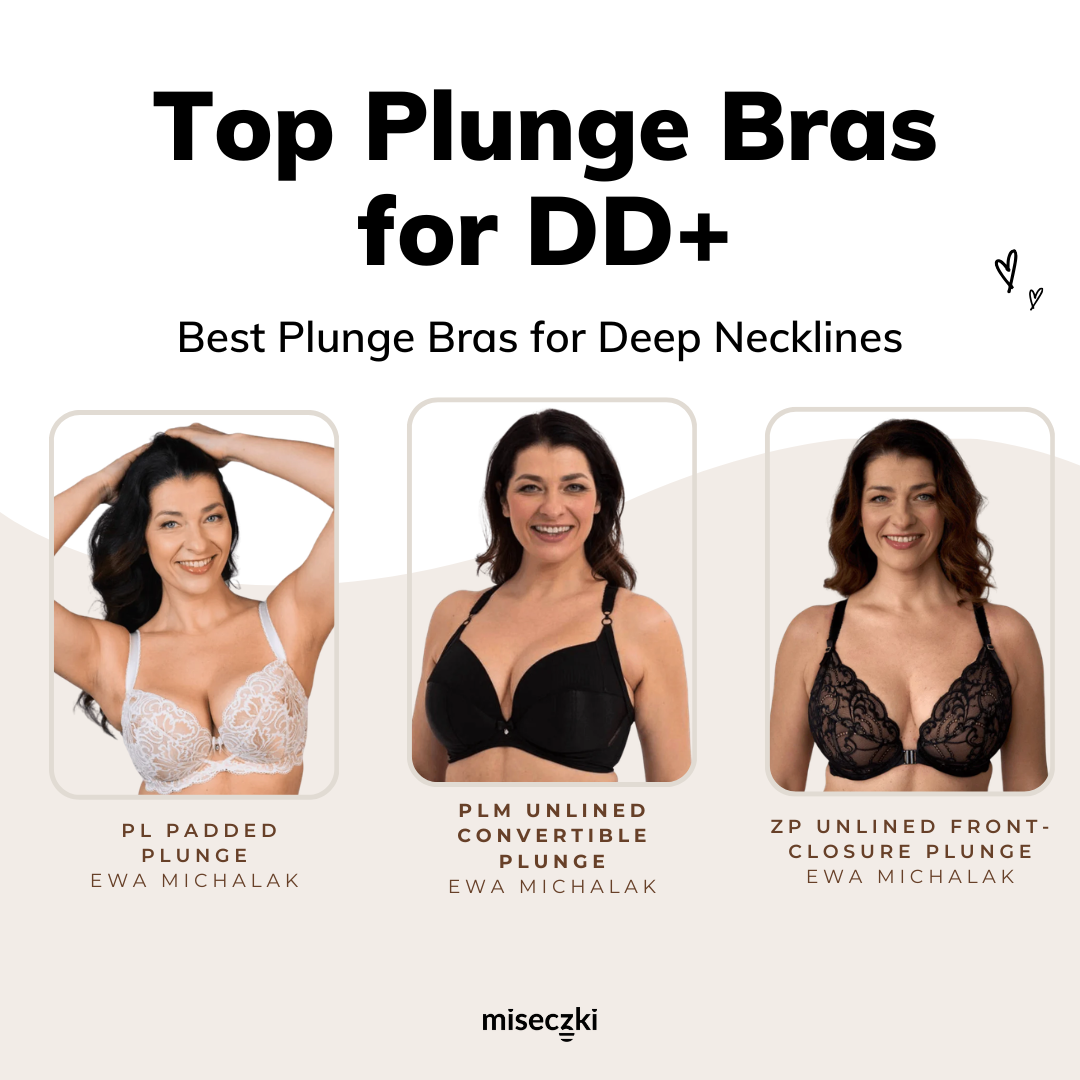

Best Plunge Bras for Deep Necklines
Low necklines and DD+ cup sizes are a notoriously difficult combination, but the problem is no...


Top Wired Polish Bras for Asymmetrical Breasts
Breast asymmetry affects more than half of all women, but most bras are built as though it doe...
DD+ Bras Made in Poland Are Our Passion & Expertise


Specialized Polish Fit Expertise
Unlike many other boutiques, Polish bras are our specialty and our passion. We work exclusively with the top Polish brands and understand the subtle nuances in fit, shape, style, and support.


Personalized Fit Support
Have a question on sizing? Start with our size guide, complete with a Polish Bra Size Calculator to find your best starting point and brand conversions. Still unsure? Contact us, for tailored fit advice.


Loyalty Points and Discounts
Join our loyalty program to earn points for discounts on future orders. Sign up for our newsletter to stay up-to-date on our latest deals and arrivals.


Fast Delivery and Exchanges
We provide fast, hassle-free, domestic delivery. All orders are shipped out of Chicago and typically arrive within a few days. If you need a size adjustment, it's easy to make a free exchange. We offer free returns for store credit (+ 5% bonus credit where eligible).