
Bra Standards For Full Busts: The Manifesto on Why DD+ Women Deserve Better Support


For generations, women with fuller busts have heard the same quiet message repeated in different ways.
Finding a good bra will always be difficult. Straps will probably hurt. Supportive bras won’t be pretty. You just have to work harder to find something that fits.
Over time, these ideas became normalized. Not because they were accurate, but because women were expected to adapt to systems that were never designed for them in the first place. Not all bras are created equal, many are not designed to meet the unique needs of full-bust women, leading to discomfort and poor support. Wearing the wrong size is also a widespread issue, further contributing to this normalized discomfort.
The lingerie industry has long treated full-bust bodies as an extension of smaller sizing rather than a design standard of their own. Instead of building bras from the ground up for the structural needs of larger busts, many brands simply scaled up patterns developed for smaller cups.
The result is an experience that countless DD+ women know well. Bras that feel supportive for an hour and uncomfortable by mid-day. Straps that dig into shoulders. Bands that creep upward. Cups that collapse or flatten instead of lifting and shaping. Not all bras provide the same level of support or comfort, especially for fuller busts.
These frustrations have become so common that many women assume they are simply part of having a fuller bust. In reality, due to limited size ranges, many women with large busts wear the wrong size and fit, typically too small in the cup and too large in the band, which only adds to these common frustrations.
But they are not.
They are the result of design standards that were never built with full-bust women in mind.
This is where the Full Bust Bra Standards Manifesto begins. Because the problem is not that full-bust bodies are difficult to support. The problem is that the standards for supporting them have historically been too low.
At Miseczki, we believe it is time to raise them.
 Woman wearing the supportive full-bust Casablanca bra by Gorsenia and matching underwear designed for comfort and structure
Why This Conversation Matters During Women’s History Month
March is often a time to reflect on the ways women have challenged systems that were never built with them in mind. Across industries, progress has happened because women refused to accept limitations as permanent. They questioned standards, demanded better design, and raised expectations for what fairness and representation should look like.
In many ways, the experience of full-bust women in the lingerie industry reflects a similar story. For years, the struggle to find supportive bras was treated as an unavoidable inconvenience rather than a problem worth solving. Women were told to adjust, compromise, or simply search harder.
But raising standards means recognizing when those struggles are not inevitable. It means acknowledging that full-bust women deserve products engineered for their bodies, not scaled versions of designs created for someone else.
Women’s History Month is ultimately about progress driven by refusing to accept systems that underserve women. And in the world of lingerie, raising the standard for DD+ support is part of that same conversation. Because when women stop accepting “that’s just how it is,” better solutions begin to appear.
The Problem: Full-Bust Women Were Never the Design Standard
In much of the mainstream lingerie industry, bra design begins with smaller sizes. A base pattern is developed, typically around a B or C cup, and then that pattern is graded upward to create larger sizes. Bra sizing is determined by two key measurements: band size (the measurement around the ribcage) and cup size (the difference between the bust and band measurements).
While this approach may work for modest size increases, it becomes increasingly ineffective as cup sizes grow. The structural demands of a fuller bust are fundamentally different than those for smaller breasts. Breast weight increases, projection becomes deeper, and the forces acting on the bra change significantly.
Simply enlarging a smaller bra design cannot account for these differences.
When a bra built for smaller busts is scaled up, several issues tend to emerge:
• Bands stretch too easily and lose their ability to anchor support
• Cups become shallow or unstable instead of accommodating projection
• Straps begin carrying far more weight than they were designed for
• Support becomes inconsistent throughout the day
For many women, this results in a cycle of constant adjustment. Tightening straps. Pulling the band downward. Shifting the cups into place again and again.
But bodies are not the problem - the design standard is.

Model showcasing Ewa SF Smooth Gładzioch polish bra by Ewa Michalak
The Myth We’ve Been Asked to Accept: “That’s Just How DD+ Bras Are”
If you have a fuller bust, chances are you have heard some version of this phrase before.
“That’s just how bras fit when you’re bigger.”
It is often said casually, almost as reassurance. But over time, that message subtly lowers expectations.
Many full-bust women come to believe that certain frustrations are unavoidable. For example:
-
Strap pressure is just part of wearing bras.
-
Bands will probably ride up eventually.
-
Supportive bras cannot also be beautiful.
-
Comfort will only last for a few hours.
Improper bra fitting is often the root cause of these frustrations, as an incorrect fit can lead to discomfort and poor support.
These assumptions shape how women shop for bras and what they expect from them. Instead of demanding better engineering, many simply search for the least uncomfortable option available.
The truth is that most of these issues are not caused by fuller busts themselves. They are symptoms of bras that were never designed to support them properly.
When a band rides up, the anchor of the bra has failed. When straps carry most of the weight, the foundation is unstable. When cups collapse under pressure, the materials and construction are inadequate. Underwire discomfort is another common issue, often resulting from a poor fit where the wire sits on breast tissue instead of the rib cage. Sometimes, bras provide support in the wrong places, causing uneven lift, discomfort, and an unflattering appearance. Common fit issues also include straps digging in, band riding up, spillage, gaping cups, and underwire discomfort.
These are not inevitable problems. They are design failures.
The moment we stop accepting them as normal is the moment the standard begins to rise.
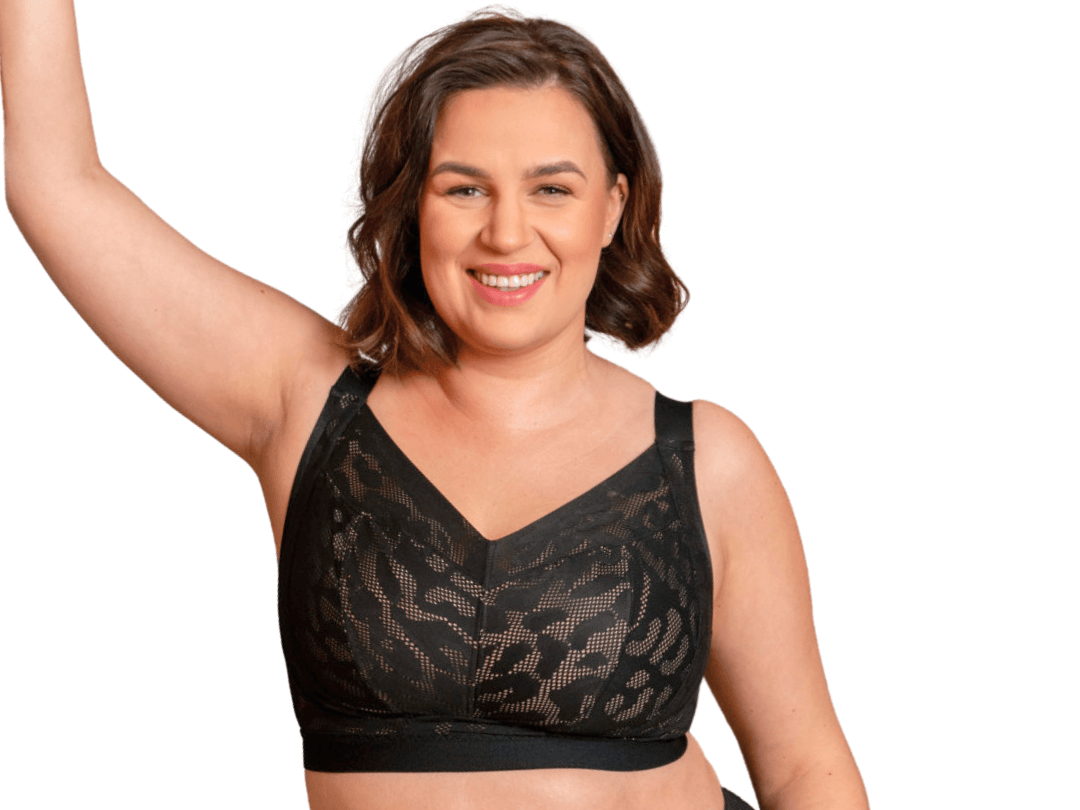
Model wearing Samanta Alex Supportive structured wireless style for full busts
Raising the Standard: What Full-Bust Bras Should Actually Do
If bras were truly designed around full-bust bodies from the beginning, the baseline expectations would look very different.
Support would not be negotiable. Comfort would not be temporary. And beauty would not need to be sacrificed in order to achieve structure.
At a minimum, full-bust bras should meet several essential standards.
They should include:
-
Wide bands that anchor support securely around the rib cage, fit snugly, and sit flat and lie flat against the body, providing about 80-90% of the bra's support. The band should be tight enough that only two fingers can fit underneath, sit low on the back, and the gore (center) should lay flat for a proper fit. A wider band with 3-4 rows of hooks offers better stability and weight distribution.
-
Cups engineered for projection rather than flattening, with full cup bras and full coverage cups providing maximum containment and support, minimizing spillage and making them ideal for everyday wear and the best support for full busts.
-
Three-part cups, seamed cups, and multi-section cups that offer better lift, shaping, and capacity for fuller busts compared to single-molded or seamless designs.
-
Reinforced side panels and side support panels that help prevent side spillage, guide tissue forward, and provide additional support, especially in side support bras to prevent 'armpit overflow.'
-
Materials strong enough to maintain shape throughout the day.
-
Wide, cushioned straps that stabilize instead of carrying the entire load, distributing weight across a larger surface area and avoiding shoulder pain. Straps should only provide about 10-20% of the total support; if straps dig in, the band is likely too loose and a smaller band size may be needed.
-
Construction that distributes weight across the torso instead of concentrating it on the shoulders, with additional support features like reinforced side panels and wide bands.
-
Designs that combine aesthetics and support rather than forcing women to choose between them.
When these standards are met, the experience of wearing a bra changes dramatically.
Instead of constant adjustment, the bra begins working quietly in the background. Support feels stable rather than temporary. Movement becomes easier and more natural.
Most importantly, women stop thinking about their bras every few minutes. They simply feel supported.
That level of reliability should not feel extraordinary. It should be the expectation.
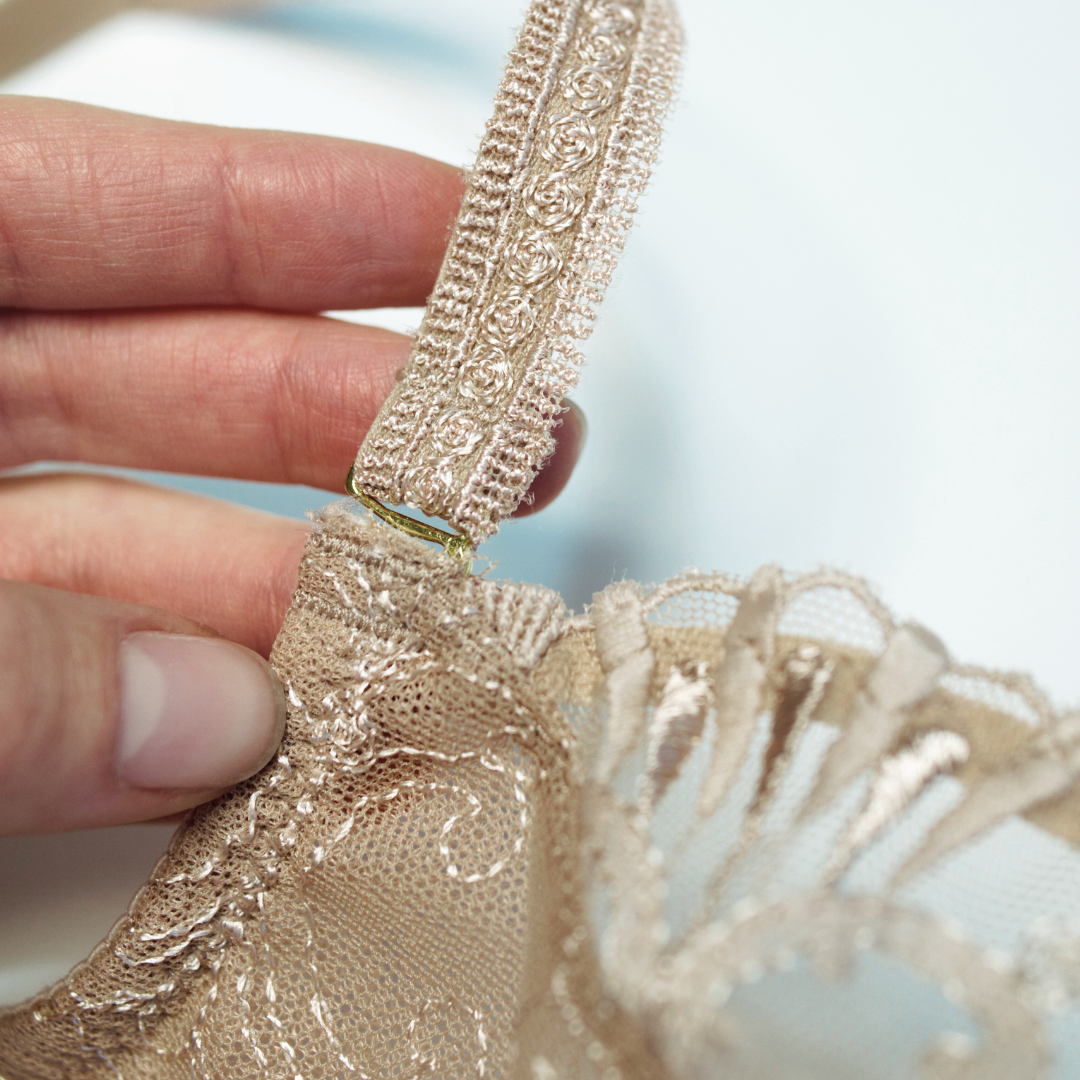
Close-up of a Samanta Lingerie bra strap and cup detail showing supportive bra construction
Why Engineering Matters More for Full Busts
Supporting a fuller bust is not simply a matter of adding more fabric or extra padding in the cup. It requires thoughtful engineering.
Breast weight naturally pulls forward and downward. Without structural support to counteract that force, the body compensates in subtle ways. Shoulders roll forward. The upper back becomes tense. Straps begin carrying far more weight than intended.
Well-designed full-bust bras redirect this force through structure rather than tension.
Several construction elements play a critical role in this process:
-
Firm bands anchor the bra to the rib cage, creating a stable foundation for support.
-
Deep cups allow breast tissue to sit naturally instead of being compressed or flattened.
-
Seamed cup construction provides lift and shape through fabric architecture rather than padding.
-
Reinforced wings and supportive materials distribute weight evenly across the torso.
-
Underwire bras are designed so the underwire sits flat against the rib cage and fully encircles the edge of the breast, never resting on breast tissue. Underwire discomfort is a sign of poor fit, properly fitted underwire should never hurt.
-
The wire shape should match the contours of your chest wall and unique breast shape to prevent poking, gaps, or center gore misplacement, ensuring optimal comfort and support.
-
Cup volume and cup shape must be matched to your individual breast shape and breast size to avoid issues like cup gaping, spillage, or bulging.
-
The bra's support should be tailored to your support needs, which vary based on breast shape, size, and tissue distribution.
-
Choosing bras that separate and encapsulate each breast is essential for intense activity and proper support, helping you stay properly supported throughout the day.
When these elements work together, the bra functions as a system rather than a collection of parts. Being properly supported prevents discomfort, improves posture, and enhances overall well-being.
This engineering-first philosophy is one of the reasons many Polish bra brands have become so respected among full-bust communities. Their designs often begin with the structural needs of fuller busts rather than adapting smaller patterns.
The result is a bra that supports consistently throughout the day rather than gradually losing effectiveness.
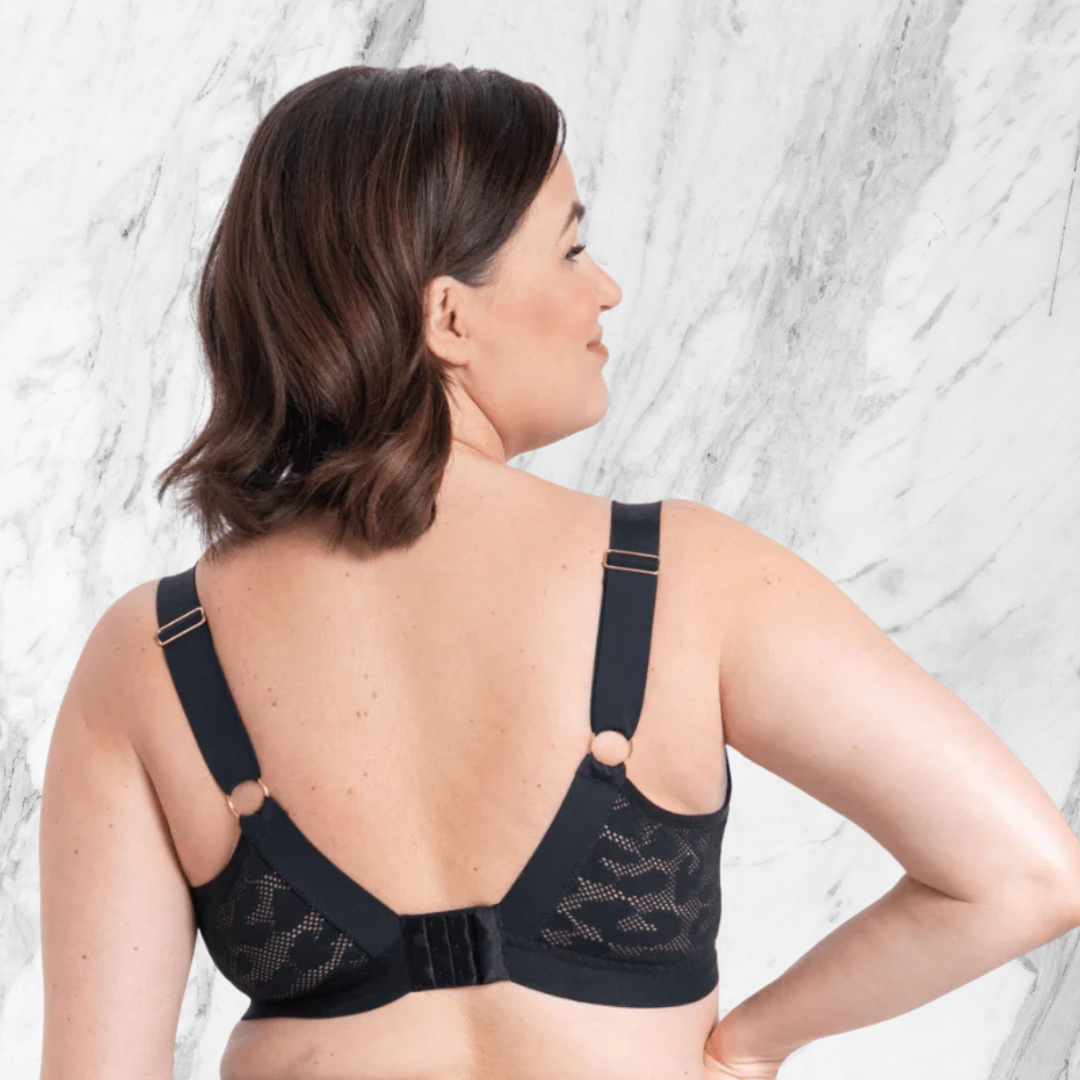
Model showcasing the back of Samanta Alex polish bra - a supportive structured wireless style for full busts
Refusing to Accept “Afterthought Design”
For decades, the lingerie industry has implicitly asked full-bust women to compromise.
If you want support, you may need to sacrifice beauty.
If you want larger sizes, you should expect limited options.
If you want comfort, you may need to search much harder to find it.
But compromise should not be the baseline expectation for half the population.
Refusing afterthought design does not mean expecting perfection. It simply means expecting intention.
Women deserve bras that are built with their bodies in mind from the beginning. That means:
• Engineering that respects the physics of fuller busts
• Size ranges that acknowledge real body diversity
• Construction that prioritizes long-term comfort and stability
When consumers begin expecting these things consistently, the industry evolves to meet those expectations.
Standards rise when women stop accepting less.
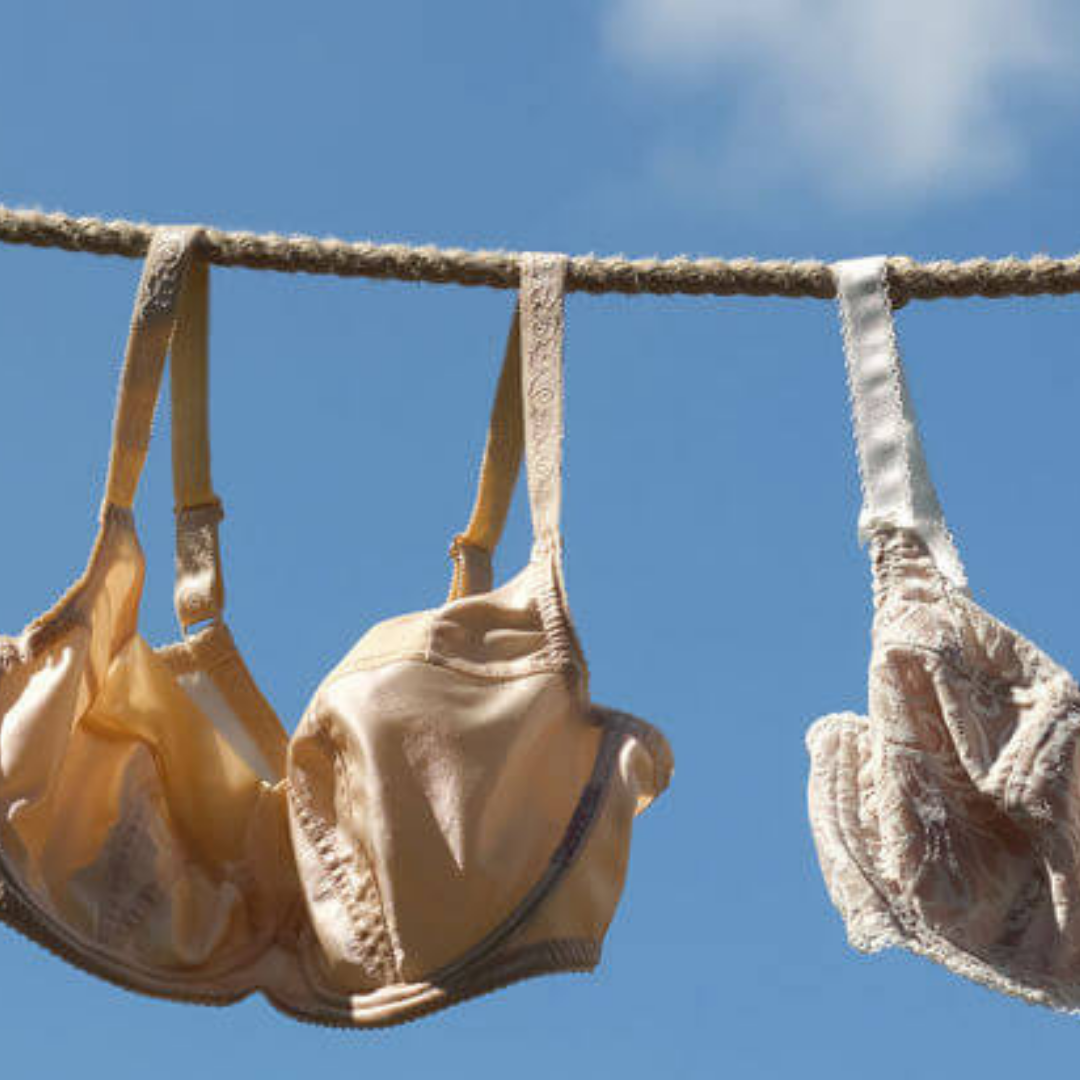
Supportive bras with structured cups and wide straps hanging on a clothesline
Our Mission: Because Full-Bust Women Deserve Better Support
At Miseczki, our mission begins with a simple belief.
Full-bust women deserve better support.
That belief guides the brands we curate and the designs we prioritize. We offer a huge range of size bras and bra styles to accommodate various support needs, including everyday wear and supportive bras for fuller busts with encapsulation designs for individual cup support during activity. Rather than focusing solely on trends or aesthetics, we look for bras that are thoughtfully engineered to support fuller busts from the foundation upward. We feature different brands, and it's important to note that sizing can vary between brands and even between countries - bra sizes can fluctuate slightly based on the style of bra you're wearing or even across different brands.
Many of the Polish bras we carry share this philosophy. Their designs emphasize:
-
Firm, supportive bands that anchor the bra securely
-
Deep cups that accommodate projection without compression
-
High-quality materials that maintain their structure throughout the day
-
Construction methods that distribute weight properly across the torso
For many customers, the experience is surprisingly emotional. After years of believing discomfort was inevitable, they finally feel what proper support actually feels like. Investing time in finding the right bra is an essential aspect of taking care of your body and enhancing your quality of life.
Many of our customers share similar experiences after finding a bra that truly supports them:



Beyond curating supportive bras, another core part of our mission is education. Many full-bust women were never taught what proper bra support should actually feel like, or how construction, sizing, and fit work together to create comfort. Through our blog, guides, and resources, we aim to share the knowledge that helps women understand their bodies and make more confident choices. Fit education is powerful because it changes the entire bra experience. When women understand how support should function, they stop settling for discomfort and start recognizing the difference between a bra that merely fits and one that truly supports them.
That shift is the reason why we do what we do.
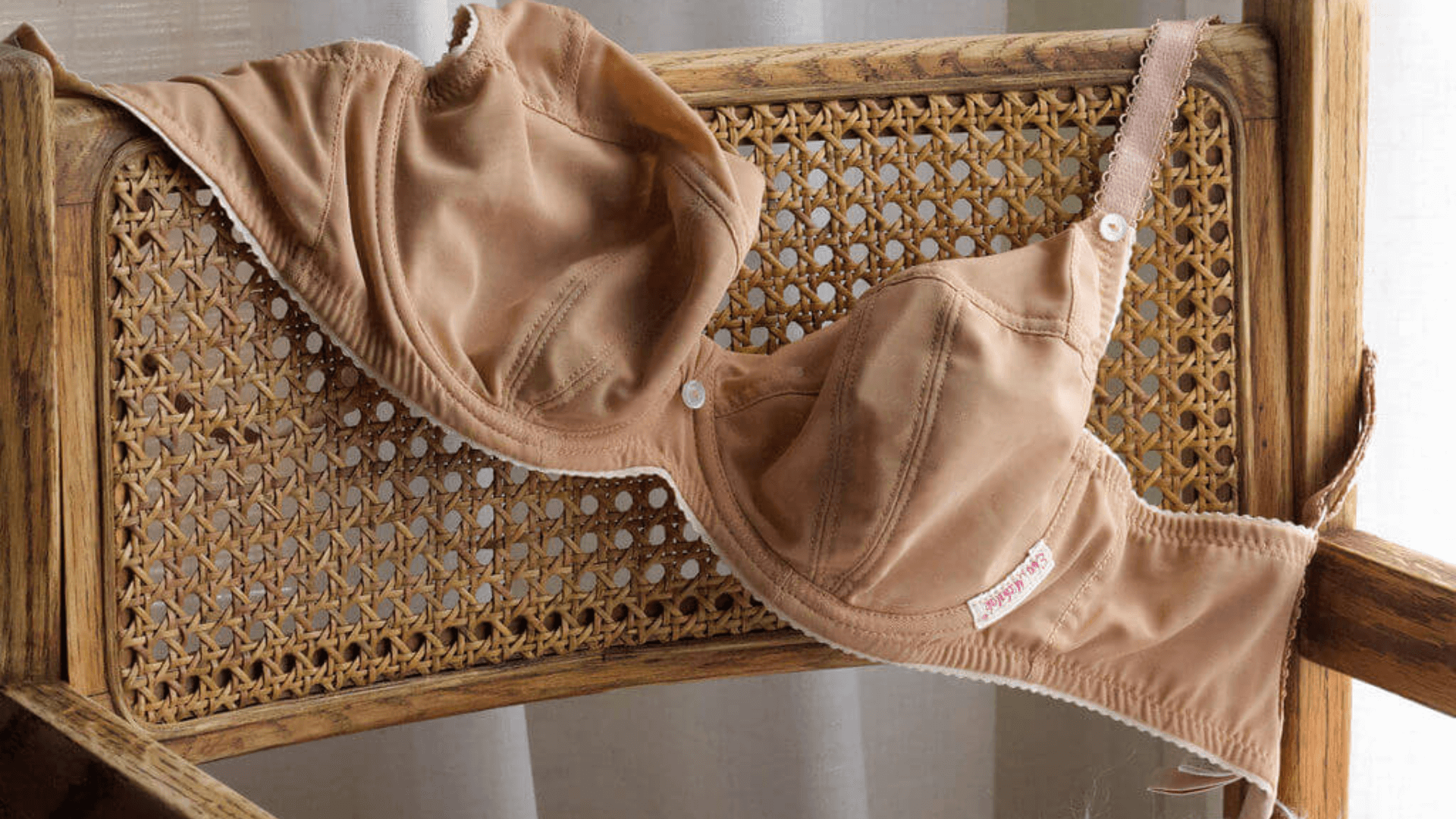
Ewa Michalak SF Gladzioch bra with seamed cups and supportive band displayed on a woven chair
Start With Better Standards
This manifesto is not about criticizing women who have struggled with bra fit. It is about challenging the systems that made those struggles feel inevitable.
Raising those standards begins with expecting more from the bras we wear. More support. More thoughtful engineering. More respect for the bodies they are meant to serve.
It means demanding bras that provide a well-fitting foundation and above all, it means recognizing that a full bust requires specialized design that goes beyond simply scaling up smaller sizes. When these standards are met, bras stop being a source of discomfort and become a source of confidence and comfort, supporting the natural curve of the body and adapting to weight fluctuations and hormonal changes.
This is the foundation for a better bra wardrobe - one where every bra feels like the perfect bra, designed with your unique shape and needs in mind.
Discover Bras Designed for Full-Bust Bodies
If you have spent years being told that discomfort is simply part of having a larger bust, it may be time to experience something different.
Explore Miseczki’s curated selection of full-bust bras designed with supportive bands, deep cups, and thoughtful construction that respects the needs of fuller bust bodies.
Discover what happens when bras are built with your body in mind.
👉 Explore full-bust bras designed for real support
👉 Experience the difference of Polish bra engineering
👉 Raise your standards for comfort, support, and confidence
Because full-bust women deserve better support. And it starts with refusing to settle for less.


How Bra Size Changes: Hormonal Changes, Weight Fluctuations, and Life Stages Affect Your Size
Your bra size isn't fixed, it shifts with your menstrual cycle, pregnancy, breastfeeding, weig...
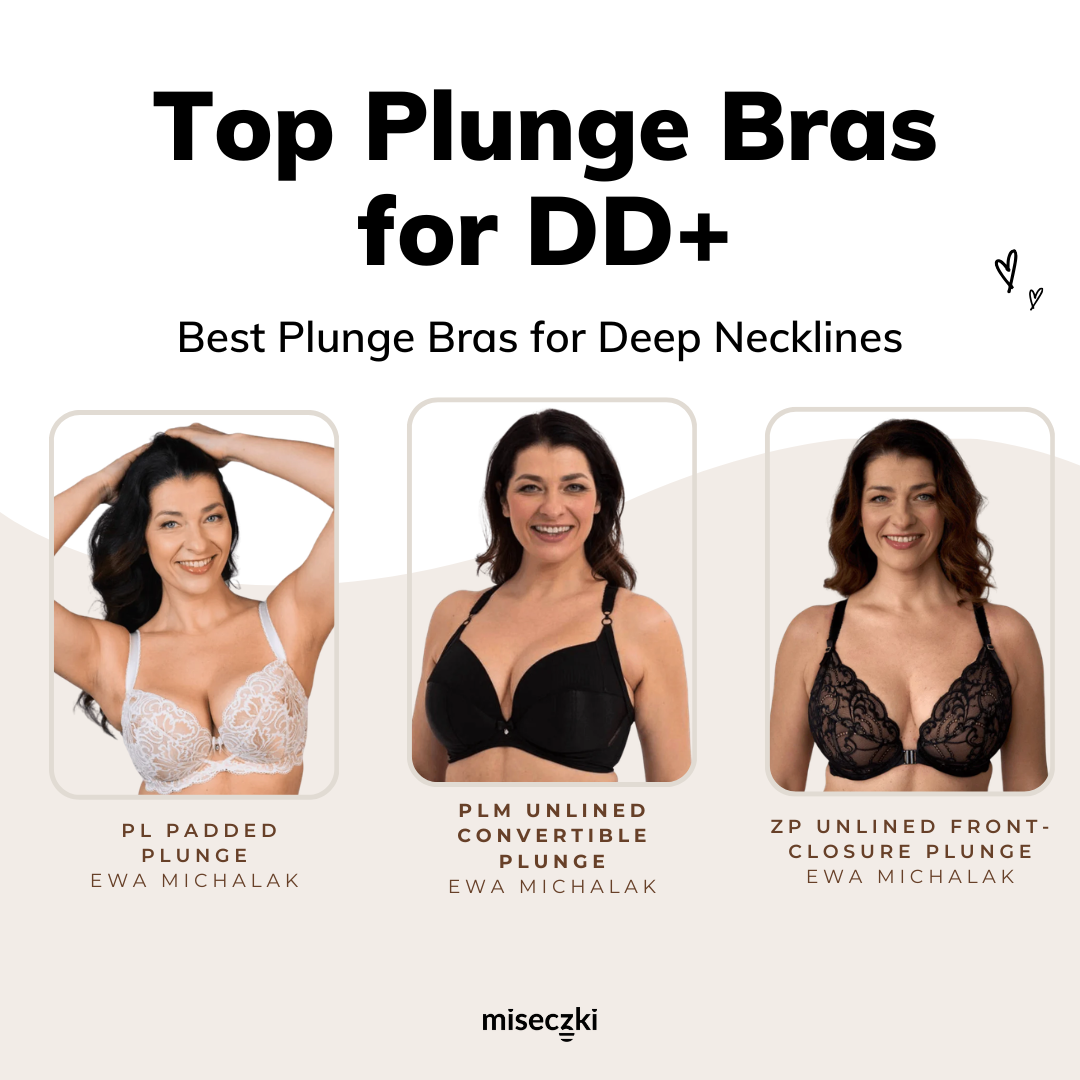

Best Plunge Bras for Deep Necklines
Low necklines and DD+ cup sizes are a notoriously difficult combination, but the problem is no...


Top Wired Polish Bras for Asymmetrical Breasts
Breast asymmetry affects more than half of all women, but most bras are built as though it doe...
DD+ Bras Made in Poland Are Our Passion & Expertise


Specialized Polish Fit Expertise
Unlike many other boutiques, Polish bras are our specialty and our passion. We work exclusively with the top Polish brands and understand the subtle nuances in fit, shape, style, and support.


Personalized Fit Support
Have a question on sizing? Start with our size guide, complete with a Polish Bra Size Calculator to find your best starting point and brand conversions. Still unsure? Contact us, for tailored fit advice.


Loyalty Points and Discounts
Join our loyalty program to earn points for discounts on future orders. Sign up for our newsletter to stay up-to-date on our latest deals and arrivals.


Fast Delivery and Exchanges
We provide fast, hassle-free, domestic delivery. All orders are shipped out of Chicago and typically arrive within a few days. If you need a size adjustment, it's easy to make a free exchange. We offer free returns for store credit (+ 5% bonus credit where eligible).